Best hook size for stocked trout
It's a common frustration among anglers, especially those new to chasing stocked trout in Nevada's beautiful waters: you've got your line in the water, the fish are biting, but you're just not hooking up, or worse, you're constantly losing them. Often, the culprit isn't your technique or even your bait, but simply the wrong hook size. This comprehensive guide is here to demystify the world of fishing hooks specifically for the feisty, often eager, but sometimes finicky stocked trout that populate our urban ponds and reservoirs.
Understanding Stocked Trout Characteristics and Feeding Habits
When you're targeting stocked trout, you're dealing with a fish that's often quite different from their wild counterparts. These trout are typically raised in hatcheries and released into designated fishing spots, often in urban areas like the Las Vegas ponds or various state park reservoirs around Nevada. Their upbringing influences their size, mouth structure, and even how they feed.
Average Size and Mouth Anatomy
Most stocked trout, especially the rainbow trout that are frequently introduced, are in the pan-sized range, often between 8 and 14 inches. While you might occasionally hook into a larger brood stock fish, the majority will be on the smaller side. What does this mean for your hooks? Well, a smaller fish naturally has a smaller mouth. Trying to use an overly large hook can result in the fish having difficulty taking the bait fully into its mouth, leading to missed bites or simply mouthing the bait and spitting it out without getting hooked.
Furthermore, hatchery-raised trout can sometimes have softer mouths compared to wild trout, which means a large, thick-wired hook can tear through their delicate mouth tissue more easily, especially during a fight. This can lead to the hook pulling out or cause significant injury to a fish you might intend to release. The goal is to use a hook that's small enough to be easily ingested but strong enough to hold securely in their jaw.
Feeding Habits in Stocked Waters
Stocked trout are often less selective than wild trout. They've been fed pellets in a hatchery setting, and once released, they're opportunists. They'll readily take a variety of baits, from PowerBait and corn to worms and even small artificial lures. However, because they're often in environments with higher fishing pressure, they can also become "hook shy." A large, conspicuous hook can be a major turn-off, especially in clear water conditions or after they've had a few encounters with anglers.
This is where finesse comes into play. A smaller, less visible hook, even if you're using a relatively large piece of PowerBait or a worm, can make all the difference. It presents a more natural appearance and makes it easier for the trout to engulf the entire offering, leading to a much better hook-up ratio. Think about it: if you're eating a sandwich, you want to get a good bite. A massive hook sticking out of their "sandwich" is just not appealing to a trout.
Demystifying Hook Sizing for Trout
Hook sizes can be incredibly confusing, but once you understand the system, it's pretty straightforward. For trout fishing, especially for stocked trout, we're generally talking about smaller hook sizes.
The Numbering System Explained
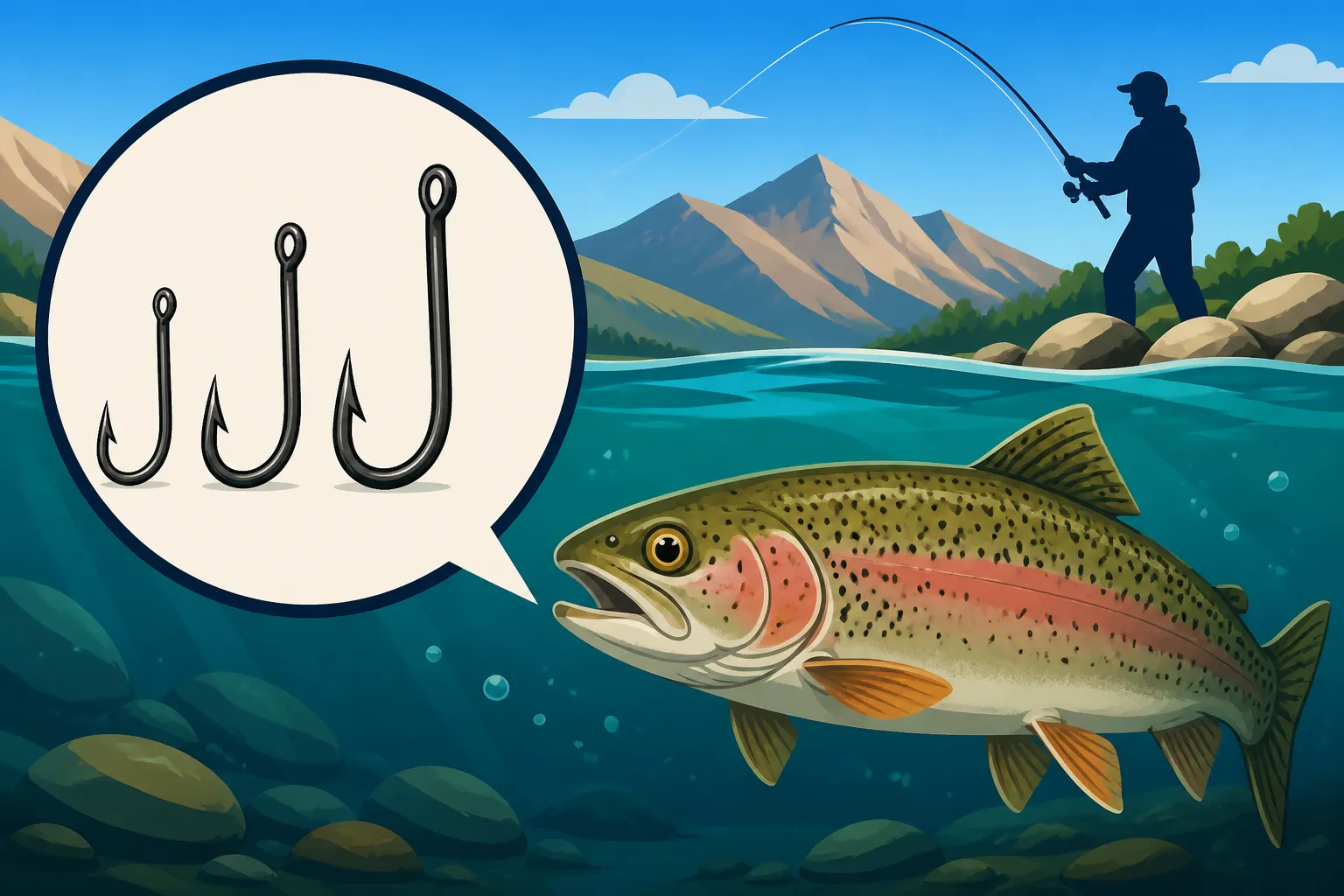
For the smaller hooks typically used for trout, the larger the number, the smaller the hook. So, a size 12 hook is much smaller than a size 4 hook. This can be counter-intuitive at first, but it's a standard that holds true across most manufacturers.
| Hook Size | Typical Use for Stocked Trout | Common Bait Examples |
|---|---|---|
| Size 14 | Very small trout, finesse rigs | Single PowerBait nugget, tiny piece of worm, salmon egg |
| Size 12 | Small to average stocked trout | Small PowerBait, single salmon egg, small live baits |
| Size 10 | Average stocked trout, versatile | Standard PowerBait, half a worm, small marshmallow |
| Size 8 | Larger stocked trout, more aggressive bites | Larger PowerBait, whole worm, small lures |
| Size 6 | Larger trout, heavier baits/lures | Larger worms, small minnows, larger artificials |
Note: This table focuses on single hooks. Treble hooks follow a similar numbering system but are generally larger for the same number.
Once you get past size 1, the numbering system flips to a "/0" (aught) system, where 1/0, 2/0, 3/0, etc., denote progressively larger hooks, usually for bigger game fish like bass or stripers. But for stocked trout, we'll rarely go into the aught sizes. For a great selection, you can often find a wide variety of these sizes at places like Bass Pro Shops or even online through Amazon.
Different Hook Types for Trout
While the size is crucial, the style of the hook also plays a role in your success.
Single Hooks
These are the most common and versatile for stocked trout.
- Baitholder Hooks: These have small barbs on the shank (the straight part of the hook) that help hold your bait in place, especially effective for worms or soft dough baits like PowerBait. A good quality baitholder hook in a size 10 or 12 is often a fantastic all-around choice for stocked trout.
- Aberdeen Hooks: Characterized by their thin wire and round bend, Aberdeen hooks are designed to be easily straightened if they snag, helping to retrieve your line and tackle. Their thin wire also penetrates easily, making them good for delicate mouths and live baits. Sizes 10-14 are popular here.
- Worm Hooks/Offset Hooks: While more commonly associated with bass fishing, smaller versions can be used for wacky rigging or Texas rigging small worms for trout, though they are less common for typical bait presentations.
- Jig Hooks: These hooks are specifically designed to have a weighted head molded onto them, creating a jig. Small trout jigs are incredibly effective, and the hook size is integral to the jig's overall profile. Often, these will be on a size 8 to 12 hook.
Treble Hooks
These have three points and are often found on artificial lures like spinners and spoons. While they offer a higher chance of hooking a fish, they can also cause more damage, making catch and release more difficult. If you're using lures that come with treble hooks, consider replacing them with single, barbless hooks for easier release, especially if you plan on practicing Catch and Release Techniques for Trout.
Matching Hook Size to Your Bait and Lure
The perfect hook size isn't just about the fish; it's also about what you're putting on that hook. The goal is for the bait or lure to conceal the hook as much as possible, yet still allow the hook point to be exposed for a solid set.
PowerBait and Dough Baits
These are staples for many stocked trout anglers. When using PowerBait or similar dough baits, you want a hook that's small enough to be mostly hidden within the bait, but large enough to secure a good chunk of it.
- Size 10 or 12 baitholder hooks are often ideal. You want to mold the PowerBait around the hook, leaving just the point and barb exposed, or sometimes even completely encapsulating it if the bait floats, allowing the hook to drift naturally. If the hook is too large, you'll use an excessive amount of bait, which can look unnatural and make it harder for the fish to get the hook fully in its mouth.
- For smaller PowerBait nuggets or single salmon eggs, a size 14 might be perfect for a very delicate presentation.
Worms and Live Baits
Live baits like worms, crickets, or even small minnows (where legal) are irresistible to trout.
- When using a piece of nightcrawler, a size 8 or 10 baitholder hook works well. Thread a portion of the worm onto the hook, leaving a lively tail to wiggle and attract attention. You want enough worm to entice, but not so much that it completely masks the hook point or hinders the worm's natural movement.
- For smaller garden worms or red wigglers, a size 10 or 12 Aberdeen hook can be excellent, providing minimal resistance and allowing the worm to move freely.
- If you're fishing with larger worms or if you're specifically targeting larger stocked trout (like those occasional holdovers), a size 6 might be appropriate. Remember to check the Nevada Fishing Regulations Explained for any specific bait restrictions in your chosen fishing spot.
Artificial Lures
Many lures, like Kastmasters, Panther Martins, or Thomas Buoyants, come pre-rigged with treble hooks.
- For small spinners and spoons in the 1/16 oz to 1/8 oz range, the stock treble hooks are usually appropriate, but as mentioned, consider swapping them for a single, barbless hook in a size 8 or 10. This helps with penetration on light bites and makes releasing fish much easier, especially if you're practicing Handling and Releasing Lahontan Cutthroat Trout (or any trout for that matter).
- For tiny jigs, often referred to as micro jigs, the hooks are usually built into the jig head. These are frequently on size 10 to 14 hooks, providing a small profile for sensitive bites.
Practical Considerations and Tips for Stocked Trout Hooks
Beyond just size, there are a few other things to keep in mind to maximize your success when targeting stocked trout.
Barbed vs. Barbless Hooks
Many dedicated trout anglers, especially those who practice catch and release, prefer barbless hooks. The barb, while designed to prevent the fish from throwing the hook, can cause more damage to the fish's mouth and make removal more difficult and time-consuming. Removing a barbless hook is quick and easy, which significantly reduces stress and injury to the fish, improving its chances of survival. Some fisheries, particularly certain sections of rivers or lakes, may even have regulations requiring barbless hooks, so always check the local rules. Even if not required, it's a practice worth adopting for conservation. You can even buy barbed hooks and gently crimp the barb down with a pair of pliers to make them barbless.
Hook Color and Line Visibility
While perhaps less critical than size, hook color can sometimes play a role, especially in clear water. Some anglers prefer bronze or black nickel hooks, believing they are less visible than bright gold or silver. The theory is that a less conspicuous hook, combined with a lighter fishing line (like 2-4 lb test monofilament or fluorocarbon leader), creates a more natural presentation that can trick wary trout. This is a subtle difference, but for pressured fish in urban ponds, every little bit helps. When you're gathering your Nevada Fishing Gear Essentials, consider adding a variety of hook colors to your tackle box.
Sharpen Your Hooks Regularly
Even the best hook, if dull, won't do its job. Stocked trout often have delicate bites, and a sharp hook is absolutely crucial for penetrating their mouths quickly and securely. Carry a small hook sharpener with you and give your hooks a few passes after every few fish, or if you notice any dullness or burrs, especially if you've been fishing rocky bottoms. You'll be amazed at the difference a truly sharp hook makes in your hook-up ratio.
Proper Hook Setting and Fighting
With smaller hooks, a gentle but firm hook set is usually all that's needed. Don't try to "cross their eyes" with a massive jerk; a firm sweep of the rod tip is often sufficient. Because the hooks are smaller and the trout's mouth can be soft, fighting the fish with a properly set drag is paramount. Too tight, and you risk tearing the hook out or breaking your light line. Too loose, and the fish might shake the hook free. A balanced approach, letting the rod and reel do the work, will keep that small hook securely in place.
Where to Stock Up
When it's time to refresh your tackle box, you'll find a wide array of options for trout hooks. Local sporting goods stores are a great resource, but for convenience and selection, many anglers turn to large retailers. You can find excellent selections of hooks suitable for Nevada's stocked trout at Bass Pro Shops, which has stores throughout the region, or easily browse and buy various brands and sizes on Amazon. Always aim for reputable brands known for quality and sharpness.
Investing a little thought into your hook choice can dramatically improve your success when chasing stocked trout in Nevada. By understanding the fish, the numbering system, and how to match your hook to your bait, you'll be well on your way to more memorable days on the water.
Disclaimer
This article is for general informational purposes only and does not constitute professional advice. Laws, prices and regulations vary by location and change over time. Consult a qualified professional for guidance on your specific situation.