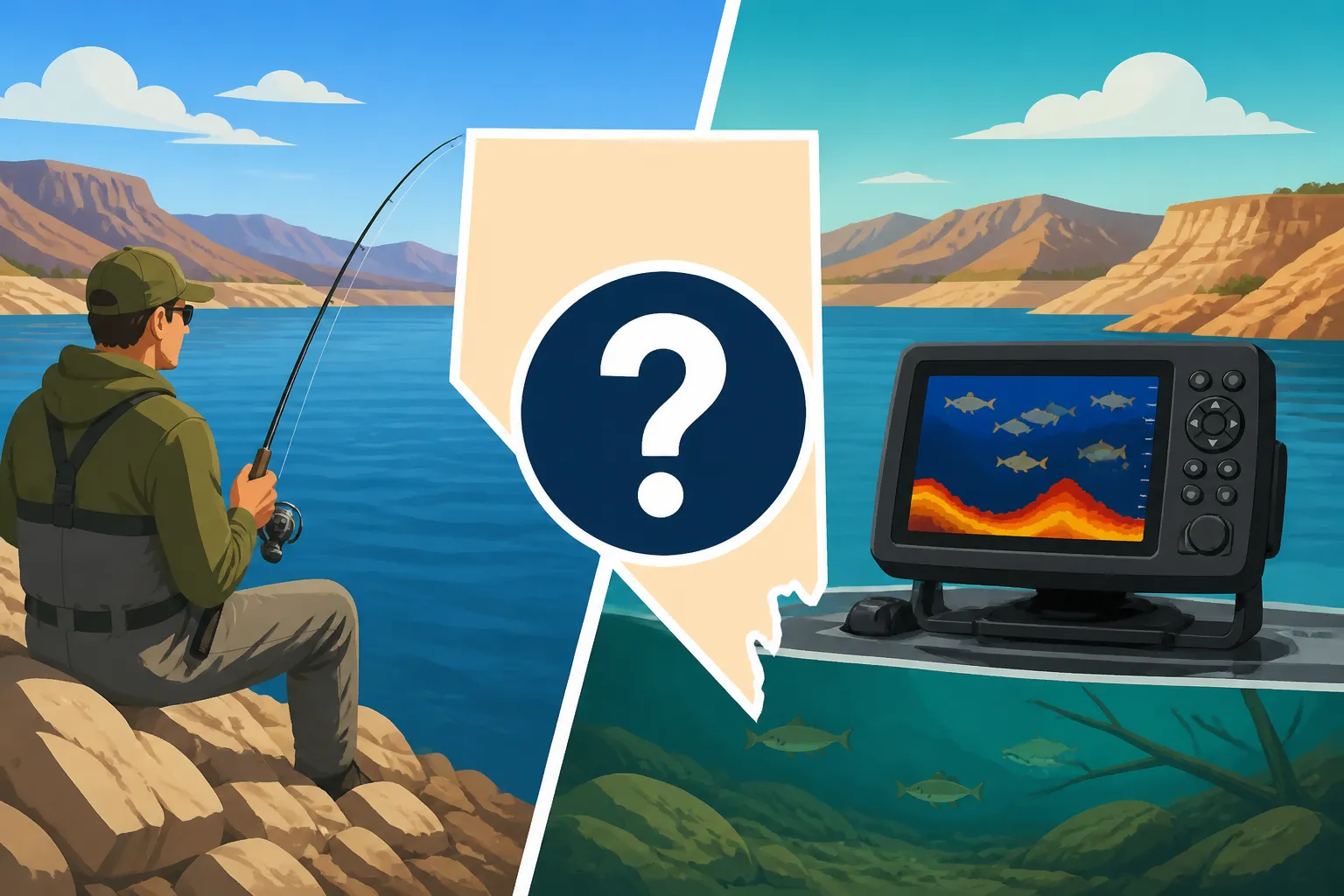
Do you need a fish finder for reservoir fishing?
Oh, the age-old debate among Nevada anglers! You're staring out at the vast, shimmering expanse of Lake Mead or the deep, mysterious depths of Lake Tahoe, and you can't help but wonder: am I really missing out by not having a fancy fish finder? It's a valid frustration; these aren't small farm ponds. This guide is going to dive deep into whether a fish finder is truly a necessity for successful reservoir fishing here in the Silver State, or if your seasoned angler instincts are enough.
The Core Question: Is a Fish Finder Absolutely Necessary for Reservoir Fishing in Nevada?
Let's be real, many of us started fishing with nothing more than a rod, a reel, and a tackle box. We'd cast, wait, and hope for the best. And sometimes, that worked beautifully! But when you graduate from those smaller, more predictable waters to the massive, complex reservoirs that dot Nevada's landscape, the game changes. The sheer size and depth can feel overwhelming, making you question every cast.
Understanding Nevada's Reservoirs: A Unique Challenge
Nevada's reservoirs are truly unique. Think about places like Lake Mead, Lake Mohave, or even the sprawling Wildhorse Reservoir up north. These aren't just big puddles; they're often vast, deep bodies of water carved out of desert canyons or nestled in mountain valleys. The water can be incredibly clear in many areas, which sounds great for spotting fish, but often means fish can see you and your boat a mile away!
Unlike a small pond where you can easily spot submerged logs or weed lines from the bank, trying to "read" the water in a massive reservoir can feel like trying to read a novel from a helicopter. You might see some surface activity, perhaps a ripple or a jumping fish, but what's happening fifty feet down in that murky canyon wall or over that invisible submerged hump? That's where the frustration often sets in. You spend hours casting into what looks like promising water, only to come up empty, all while knowing there are fish somewhere down there. These deep, often featureless (from above) expanses hide intricate underwater terrain that's critical to finding fish.
The "Old School" Approach: Can You Still Catch Fish Without One?
Absolutely, you can still catch fish without a fish finder! Generations of anglers, long before electronics became commonplace, successfully fished these very waters. This "old school" approach relies heavily on a combination of observation, local knowledge, and understanding fish behavior. For instance, keen anglers learn to observe bird activity, which often indicates baitfish schooling near the surface, hinting at predators below.
Many bank anglers become experts at identifying visible structure from shore – rock piles, points, areas with submerged brush if the water is low enough. They'll use topographic maps (paper or digital) to study the contours of the lake bottom and predict where fish might hold. This method is incredibly rewarding, as it deepens your connection to the environment and hones your natural instincts. However, it often comes with a significant learning curve and requires a considerable investment of time on the water. You might spend many trips just exploring and learning the nuances of a specific spot before you consistently find success, which can be tough when you've got limited time off. It's a testament to patience and persistence, but it also leaves a lot to chance.
How a Fish Finder Transforms Your Reservoir Fishing Experience
So, while you can fish without one, a fish finder isn't just a gadget; it's a powerful tool that fundamentally changes how you fish, especially in the complex environments of Nevada's reservoirs. It's like going from navigating by stars to having a detailed GPS system – you just know so much more about your immediate surroundings.
Locating Structure and Depth: Unlocking Underwater Secrets
The biggest game-changer a fish finder offers is its ability to peel back the watery veil and show you what's beneath the surface. Nevada's reservoirs are often man-made, meaning they have old creek beds, roadbeds, submerged foundations, and countless rock piles that are absolutely invisible from above. A fish finder instantly reveals these hidden structures: that sudden drop-off where bass ambush prey, the subtle humps where crappie congregate, or the deep ledges where colossal Mackinaw trout at Lake Tahoe might be lurking.
Knowing the exact depth you're fishing, and the contours of the bottom, allows you to present your bait or lure precisely where the fish are. In summer, when many species retreat to cooler, deeper water, a fish finder can even show you the thermocline – the layer of water where the temperature changes rapidly. This is crucial because many game fish will hold right on or just above the thermocline. Without this information, you'd be guessing, potentially casting above or below the strike zone for hours. This kind of insight significantly increases your efficiency and reduces the guesswork, making your time on the water far more productive.
Identifying Fish and Bait Balls: Seeing What's Below
Beyond just showing structure, modern fish finders can actually display targets that are, well, fish! Whether they appear as distinct arches on a 2D sonar screen or more realistic shapes on Down or Side Imaging, seeing actual fish beneath your boat is incredibly motivating. It confirms you're in the right area and helps you fine-tune your presentation. Are they suspended midway? Are they hugging the bottom? Are they scattered or grouped? These are all questions your fish finder can answer.
Even more exciting is the ability to spot bait balls. These dense schools of smaller fish, like shad or minnows, are natural magnets for predatory species such as striped bass and larger trout. When you mark a bait ball on your screen, you know you're in a prime feeding zone. Instead of blindly casting, you can position your boat directly over or near the activity, using techniques like Jigging Techniques for Lake Mead Stripers to target those feeding fish. This saves an enormous amount of time and effort, preventing you from casting into "dead water" and putting your lure right in front of hungry fish.
Water Temperature and Bottom Composition: Fine-Tuning Your Strategy
Think of a fish finder as a whole suite of sensors rolled into one. Most modern units provide accurate water temperature readings, both at the surface and often deeper into the water column. For species like trout and bass, water temperature is a huge factor in their activity levels and where they choose to hold. Knowing the ideal temperature range for your target species can help you quickly eliminate unproductive areas and focus on the most promising ones. This is especially true when figuring out Best Time of Year to Fish in Nevada for certain species.
Furthermore, these devices can give you clues about the bottom composition. A hard, rocky bottom, often preferred by smallmouth bass, will show up differently than a soft, muddy bottom, where you might find catfish or largemouth bass in certain seasons. Some advanced units can even give you a visual representation of hard vs. soft bottom, allowing you to tailor your bait or lure presentation accordingly. For instance, a jig might work great on rocks, while a soft plastic worm might be better on a silty flat. This level of detail empowers you to make smarter, more informed decisions about your fishing strategy.
Types of Fish Finders for Nevada Reservoir Anglers
The world of fish finders can seem daunting with all the jargon and features, but it really boils down to matching the technology to your fishing style and budget. There's something for everyone, from the casual weekend warrior to the dedicated tournament angler.
Entry-Level and Portable Options: Getting Started Without Breaking the Bank
If you're just dipping your toes into the world of electronics or primarily fish from a kayak, float tube, or even the bank, you don't need to mortgage the house for a top-of-the-line unit. Entry-level fish finders are incredibly capable and user-friendly. These often feature basic 2D sonar, which is still excellent for showing depth, bottom contours, and clear fish arches. Many are portable, meaning they come with a transducer that attaches with a suction cup or clamp, and a small, self-contained battery.
Brands like Deeper, Lowrance, or Garmin offer fantastic portable options that are compact and easy to deploy. You can find many excellent choices on Amazon that offer surprising performance for their price point. These are perfect if you're exploring different parts of a reservoir in a smaller craft, or if you simply want to know what's directly beneath your fishing spot on a dock or a shoreline. They might not have all the bells and whistles, but they’ll give you that crucial insight into depth and fish presence that can make all the difference. For someone exploring Best Kayak for Fishing Nevada Reservoirs, a portable unit is often the perfect starting point.
Mid-Range and Advanced Models: Sonar, GPS, and Mapping Features
For those who spend significant time in a boat on Nevada's larger reservoirs, stepping up to a mid-range or advanced fish finder is where you truly unlock the potential. These units integrate more sophisticated sonar technologies like CHIRP, Down Imaging (DI), and Side Imaging (SI).
- CHIRP sonar provides much clearer, more detailed target separation, meaning you can distinguish individual fish even within a school or near structure.
- Down Imaging gives you a photo-like view of what's directly beneath your boat, making it incredibly easy to identify submerged trees, rock piles, and even individual fish.
- Side Imaging is a game-changer for covering water quickly, allowing you to scan hundreds of feet to either side of your boat. Imagine cruising along Lake Mead Nevada Fishing Guide and being able to see a school of stripers holding off a submerged point 100 feet to your left – all without ever driving over them. This technology saves immense time in finding productive areas.
Beyond advanced sonar, these units typically include robust GPS capabilities. This isn't just for navigation; it allows you to mark waypoints for productive fishing spots, follow precise contours, and even create custom maps of areas not covered by pre-loaded charts. Having a reliable GPS is crucial on expansive waters where landmarks can be few and far between. Leading brands like Humminbird, Garmin, and Lowrance offer a wide range of these feature-rich units, often bundled with detailed mapping of popular bodies of water. These larger units typically require a dedicated 12V battery and more permanent installation, often on the transom or thru-hull.
Installation and Power Considerations
When choosing a fish finder, especially for a boat, installation is key. Most common transducers are transom-mounted, bolted to the back of your boat, which works well for most applications. For serious anglers, thru-hull transducers offer cleaner readings at higher speeds, as they're mounted directly through the boat's hull. Kayakers often use in-hull or portable suction-cup mounts.
Power is another critical factor. While portable units might run on AA batteries or a small, rechargeable internal battery for a few hours, more powerful, feature-rich units demand a dedicated 12-volt deep-cycle battery. If you're planning full days on the water, especially running multiple graphs or a strong trolling motor, ensure your battery setup can handle the load. Nothing's worse than your electronics dying just as the bite heats up! It's all part of preparing your fishing gear essentials for a successful trip.
Making the Decision: Is it Right for You?
Ultimately, the question of whether you need a fish finder comes down to your personal fishing goals, style, and how much time and money you're willing to invest. There's no single "right" answer, but understanding the benefits and trade-offs can help you make an informed choice.
Your Fishing Style and Target Species
Consider how and where you typically fish. If your idea of a perfect day is casually casting for stocked trout in one of Las Vegas's urban ponds from the bank, a high-end fish finder might genuinely be overkill. You're usually targeting fish that have been recently introduced and are often in predictable locations. However, if you're venturing out onto Pyramid Lake Nevada Fishing Guide to target elusive Lahontan Cutthroat Trout, which often suspend at specific depths or hug underwater ledges, a fish finder becomes an incredibly valuable asset.
Similarly, if you're a dedicated bass angler spending hours dissecting structure for Largemouth Bass Fishing in Nevada or Smallmouth Bass Fishing in Nevada at Lake Mead, a fish finder will dramatically improve your success rate. It allows you to quickly locate brush piles, rock formations, and ledges that are otherwise invisible. For those who love trolling for Mackinaw Lake Trout at Lake Tahoe, precise depth control and identifying schools of baitfish (like kokanee salmon, if present) are almost impossible without a reliable sonar unit. Your target species and chosen techniques heavily influence the utility of a fish finder.
Budget vs. Benefit: The Investment Question
Let's be frank: fish finders can be a significant investment, ranging from a couple of hundred dollars for basic portable models to several thousand for professional-grade units. This cost can be a deterrent, especially when you consider all the other Nevada Fishing Gear Essentials you need. However, think about it in terms of benefit: how much is your time on the water worth? How much frustration can you avoid by quickly finding fish-holding structure?
Many anglers find that even a modest investment in a basic fish finder pays dividends quickly through increased catches and a deeper understanding of the waters they fish. It transforms blind casting into targeted fishing. You might start with a simple, affordable model available on Amazon, learn the ropes, and then upgrade later if your passion grows and your needs become more sophisticated. The goal isn't to buy the most expensive unit, but the one that provides the most bang for your buck relative to your fishing habits.
Here's a quick comparison to help visualize the options:
| Feature/Need | Basic Portable Fish Finder | Mid-Range Boat Fish Finder | Advanced Multi-Function Display |
|---|---|---|---|
| Depth Reading | Yes | Yes | Yes |
| Fish Arches/Targets | Basic | Clearer, better separation | Highly detailed, realistic |
| Bottom Composition | Basic indication | Good distinction (hard/soft) | Very clear, 3D mapping options |
| Structure Imaging | No | Down Imaging often included | Down, Side, 360 Sonar |
| GPS & Mapping | Basic waypoints (some models) | Good GPS, limited pre-loaded maps | Full GPS, detailed charts, custom mapping |
| Water Temperature | Yes | Yes | Yes |
| Screen Size | Small (3-5 inches) | Medium (5-7 inches) | Large (7-12+ inches) |
| Power Needs | Small battery (AA/rechargeable) | Dedicated 12V marine battery | Larger 12V marine battery |
| Portability | High (ideal for kayak/bank) | Moderate (fixed install, some quick-release) | Low (fixed install) |
| Best For | Casual, bank, kayak, float tube | Serious recreational boat anglers | Tournament, dedicated fishing vessels |
Learning Curve and Maximizing Your Investment
It's important to understand that a fish finder isn't a magic wand. You can't just turn it on and automatically catch fish. There's a learning curve involved in interpreting what you see on the screen. Those arches, blobs, and color changes mean something, and understanding them takes practice. You'll want to study your unit's manual, watch online tutorials, and spend time experimenting on the water.
Learning to correlate what you see on the screen with actual fish behavior and catching success is key. For instance, understanding How to use a fish finder to locate suspended stripers requires both technical knowledge of the device and an understanding of how stripers relate to bait and structure. Don't be discouraged if you don't instantly become a pro; stick with it, and you'll soon find yourself making more informed decisions, casting more precisely, and ultimately, catching more fish. It's an investment not just in gear, but in your skill as an angler.
In conclusion, while not strictly "required" in the sense that you can't fish without one, a fish finder dramatically enhances the reservoir fishing experience in Nevada. It transforms an often frustrating guessing game into a more strategic and successful pursuit, giving you an undeniable edge on the water.
Disclaimer
This article is for general informational purposes only and does not constitute professional advice. Laws, prices and regulations vary by location and change over time. Consult a qualified professional for guidance on your specific situation.