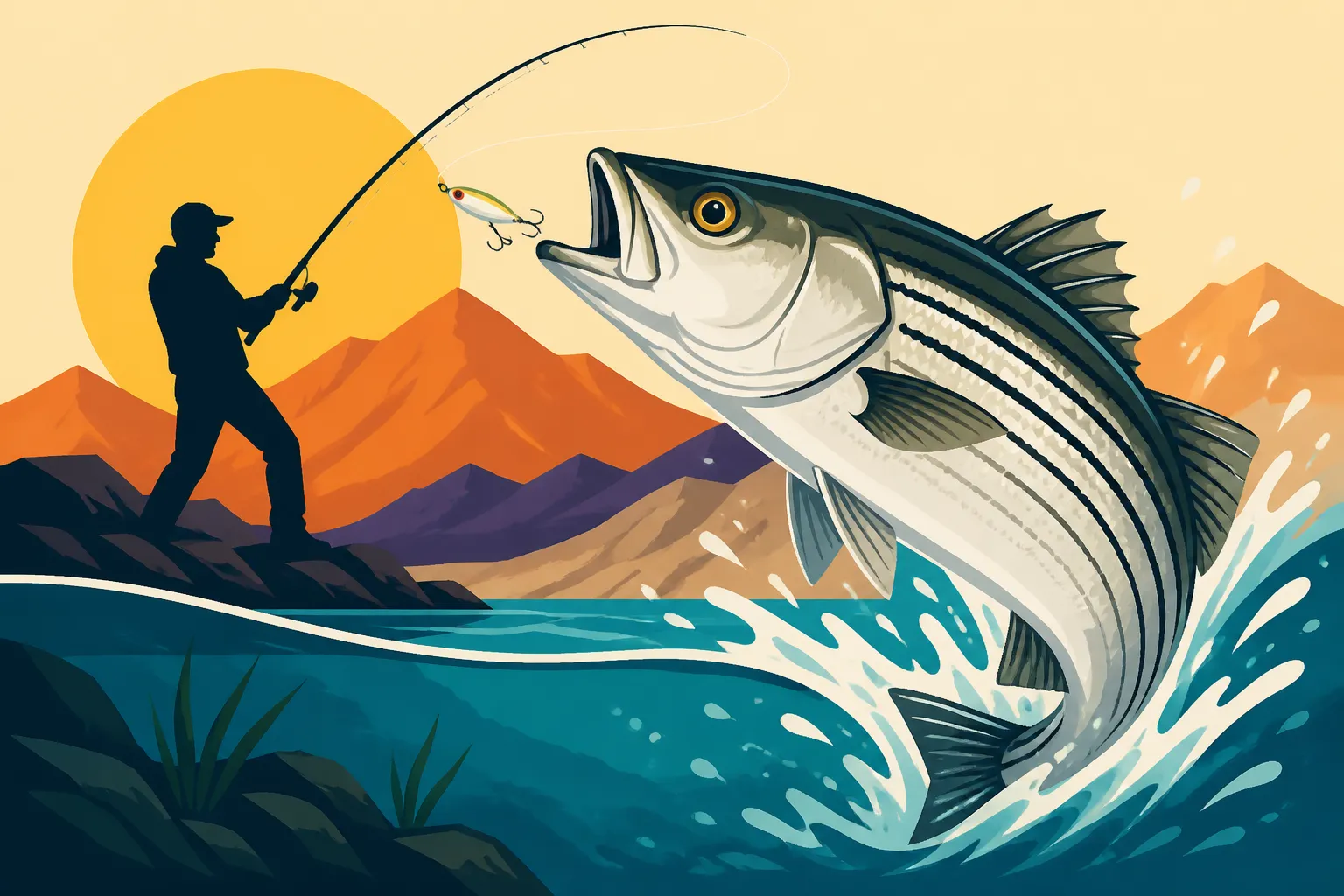
How to Fish for Striped Bass in Nevada
There’s nothing quite like the electrifying pull of a striped bass on your line, especially here in Nevada, where these hard-fighting fish have carved out a niche in our desert reservoirs. But let's be real, tackling a vast expanse like Lake Mead or Lake Mohave for these powerful predators can feel overwhelming, like trying to find a needle in a haystack that’s bigger than some small states. If you've ever felt that frustration, wondering where to even start or why your usual techniques aren't working, you're in the right place. This comprehensive guide is designed to cut through the confusion, offering you the detailed strategies, gear advice, and seasonal insights you need to consistently hook into Nevada's incredible striped bass fishery.
Understanding Nevada's Striped Bass Fishery
When you think of Nevada, you probably picture casinos and vast desert landscapes, not necessarily world-class fishing. But the truth is, our state harbors some truly fantastic striped bass opportunities, particularly in the lower Colorado River system. Understanding where these fish live, how they behave, and what they eat is the crucial first step to becoming a successful striper angler here. These aren't just any bass; they're unique, adaptable, and demand a particular approach.
Where Striped Bass Thrive in Nevada
Nevada’s striped bass population primarily thrives in the massive reservoirs formed by the Colorado River: Lake Mead and Lake Mohave. These vast bodies of water, with their deep canyons, expansive open areas, and abundant forage, provide the perfect habitat for stripers to grow large and aggressive.
Lake Mead, the larger of the two, is often considered the epicenter of Nevada’s striper fishing. Its immense size, covering over 112 miles of shoreline when full, presents both incredible potential and significant challenges. Historically, Lake Mead was renowned for its trophy-sized stripers, with fish regularly exceeding 30 or even 40 pounds. While current water levels and environmental factors have shifted the fishery, it still holds a robust population of smaller, more numerous stripers, with plenty of opportunities for exciting action. These fish navigate a complex underwater landscape of submerged structures, old river channels, and expansive flats, making them a true puzzle to solve. If you're looking for more in-depth information about this fishery, check out our guide on Lake Mead Nevada Fishing Guide.
Just downstream from Lake Mead, Lake Mohave offers a slightly different, though equally productive, striped bass experience. This narrower, deeper lake, stretching 67 miles between Davis Dam and Hoover Dam, often boasts clearer water than Mead and can be particularly good for targeting stripers along its steep canyon walls and points. While Mohave might not have the sheer volume of stripers that Mead once did, it offers consistent action, especially around the Willow Beach area, known for its trophy-sized rainbow trout, which also serve as a food source for larger stripers. The unique hydrology of Lake Mohave, with colder water released from the depths of Lake Mead, influences striper behavior differently, often keeping them active and feeding even during the hotter months. Understanding the subtle differences between these two reservoirs is key to consistent success. Our Lake Mohave Nevada Fishing Guide offers even more specific insights into this particular fishery.
Striped Bass Behavior and Seasonal Patterns
Striped bass are highly migratory and schooling fish, and their behavior in Nevada’s reservoirs is heavily dictated by water temperature, forage availability, and spawning cycles. Unlike their anadromous counterparts that run rivers to spawn, reservoir stripers are landlocked, yet they still exhibit strong seasonal patterns.
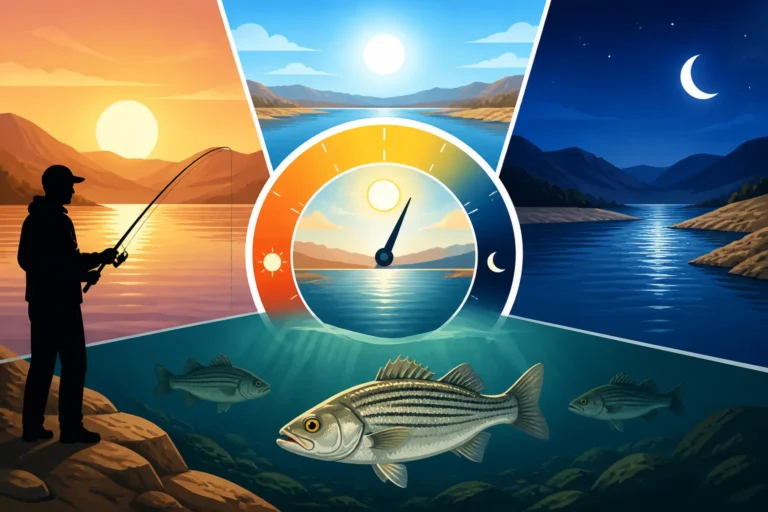
In general, stripers are drawn to areas where their primary food source, threadfin shad and gizzard shad, congregate. These baitfish are temperature-sensitive, often holding in specific depth ranges throughout the year. As the water warms in spring, shad move shallower to spawn, and the stripers follow, leading to some of the most exciting surface action of the year. Conversely, in the heat of summer, both shad and stripers will seek the cooler, oxygenated water of deeper sections. Understanding these movements is critical; you can't just throw a lure anywhere and expect results.
Furthermore, striped bass are known for their "boils" – explosive feeding frenzies where large schools of stripers drive shad to the surface, creating a visual spectacle of splashing fish. These boils can occur at any time but are particularly common during low light conditions or when the fish are actively feeding on dense schools of bait. Learning to spot these boils, or even anticipate them, is a game-changer for striper anglers. Their schooling nature means that if you find one, you've likely found many, offering multiple hook-up opportunities. Staying informed about the Nevada Striped Bass Seasonal Patterns can dramatically improve your chances of being in the right place at the right time.
Preferred Forage and Feeding Habits
The diet of striped bass in Nevada reservoirs primarily revolves around threadfin shad and gizzard shad. These small, silvery baitfish are incredibly abundant and form the foundation of the striper food chain. Stripers are opportunistic predators with large mouths, built for gulping down schools of baitfish.
They employ a variety of feeding strategies. Often, they will herd schools of shad into tight balls against structure, such as ledges, points, or even the surface, before attacking en masse. This "herding" behavior is what often leads to the famous striper boils. When they're not actively boiling, stripers will cruise open water or ambush prey from structure. They are highly attuned to vibrations and visual cues, making lures that mimic injured or fleeing shad incredibly effective. The size of the shad in the lake can change throughout the year, so paying attention to what the fish are actually eating, if you can discern it, is a huge advantage. Sometimes, stripers will even feed on other species like small sunfish or even juvenile trout, especially in areas like the upper reaches of Lake Mohave near Willow Beach where trout are regularly stocked. Matching your lure's size, color, and action to the prevalent baitfish is arguably the most critical aspect of consistent striper fishing.
Essential Gear for Nevada Striped Bass Fishing
Stepping up to target striped bass in Nevada means being prepared with the right tackle. These fish are powerful, often reaching significant sizes, and they fight dirty. You wouldn't bring a knife to a gunfight, and you shouldn't bring ultralight trout gear to a striper brawl. From the rod in your hand to the lures in your tackle box, every piece of equipment plays a vital role in your success.
Rods, Reels, and Line Selection
Choosing the right rod, reel, and line is foundational for striped bass fishing. You need gear that can handle the sheer power of these fish while allowing you to cast heavy lures or manage deep-water presentations.
For casting lures from shore or a boat, a medium-heavy to heavy action spinning or baitcasting rod, typically 7 to 9 feet long, is ideal. The longer rod aids in casting distance, which is often crucial when stripers are busting bait at a distance or you're trying to reach a deep ledge from shore. A fast tip allows for good casting accuracy and sensitivity to detect subtle bites, while the robust backbone helps you muscle in powerful fish. For baitcasting reels, look for models with a high gear ratio (7.1:1 or higher) for quickly reeling in slack and keeping up with fast-moving fish, paired with a smooth, powerful drag system. Spinning reels should be in the 4000-6000 series range, again with a solid drag. Many anglers find it helpful to check sites like Amazon for a wide selection and user reviews to find the best fit for their budget and fishing style. When it comes to the best tools for the job, you can find a comprehensive breakdown in our Best Fishing Rods for Nevada Lakes guide.
Line selection is equally critical. Braided line is a popular choice for its incredible strength-to-diameter ratio, minimal stretch (which means better sensitivity and hook sets), and long casting capabilities. A 30-50 pound test braided line is a good starting point for most striper applications. However, braid can be highly visible in clear Nevada waters, so it's almost always paired with a fluorocarbon leader of 15-30 pound test. Fluorocarbon is nearly invisible underwater, offers excellent abrasion resistance against rocks and teeth, and has some stretch to absorb head shakes. If you prefer monofilament, opt for a 15-25 pound test, though you'll sacrifice some sensitivity and casting distance compared to braid. Make sure your line is fresh and regularly inspected for nicks and abrasions, as a trophy striper will exploit any weakness. For more detailed insights on what line to use, explore our Best Line for Desert Reservoir Fishing article.
Lures and Baits for Stripers
The world of striper lures and baits is vast, but focusing on what mimics their primary forage will simplify your choices and increase your success.
When stripers are actively chasing bait on the surface or in the upper water column, topwater lures are incredibly exciting and effective. Poppers, walk-the-dog baits like a Heddon Super Spook, and pencil poppers create commotion and imitate fleeing shad. Think noisy, splashy, and high-contrast colors like chrome/blue or white. Swimbait-style lures, both soft and hard-bodied, are excellent for imitating the natural movement of shad just below the surface or at mid-depths. Brands like Keitech or Lucky Craft make highly realistic swimbaits that often draw strikes when other lures fail. For a vast selection of lures and baits, anglers often turn to Amazon to find specific brands or bulk deals, especially when stocking up for a season.
For deeper water or when stripers are suspended, heavy spoons (like a Kastmaster or Hopkins Shorty), jigging spoons, and lipless crankbaits (such as a Rat-L-Trap) are deadly. These lures sink quickly and can be retrieved with a yo-yo action or a steady retrieve to entice strikes from less active fish. When it comes to live bait, anchovies and cut shad are king. These can be fished on a sliding sinker rig or suspended under a bobber. Chumming with finely cut anchovies can often draw in schools of stripers, creating a feeding frenzy directly under your boat or near the shore. For a deeper dive into the most effective offerings, check out our Best Lures for Striped Bass guide, and for specific bait techniques, don't miss our Chumming and Anchovy Techniques for Stripers article.
Terminal Tackle and Accessories
Beyond the main rod, reel, and line, a well-stocked tackle box with the right terminal tackle and accessories can make or break a striper fishing trip.
You'll need a variety of hooks: circle hooks are excellent for bait fishing as they often hook fish in the corner of the mouth, making for easier releases and preventing gut-hooking. Sizes 3/0 to 6/0 are common, depending on bait size. Treble hooks on lures should be sharp and strong enough to withstand the fight. Swivels, especially heavy-duty ball bearing swivels, are crucial to prevent line twist, particularly when trolling or using lures with aggressive actions. Sizes 1/0 to 3/0 are typically sufficient. A range of sinkers – egg sinkers for Carolina rigs, pyramid sinkers for strong currents, and drop shot weights – will help you present your bait at the desired depth. Leaders made of 15-30 lb fluorocarbon are essential for stealth and abrasion resistance.
Don't forget the tools! A good pair of long-nosed pliers or hook removers are invaluable for safely extracting hooks from powerful, toothy stripers. A Boga Grip or similar lip gripper will allow you to safely handle larger fish without touching their sharp gill plates or thrashing bodies. A reliable measuring tape and a digital scale are important for checking regulations and documenting your catch. And because you're fishing in Nevada, sun protection is non-negotiable. A wide-brimmed hat, polarized sunglasses (crucial for spotting fish and structure), and high SPF sunscreen will protect you from the intense desert sun. Things like quality polarized sunglasses or a sturdy fishing backpack, crucial for desert fishing, can be easily found and reviewed on Amazon, ensuring you're prepared for long hours on the water. For a full rundown of what to bring, consult our Nevada Fishing Gear Essentials guide, and remember to prioritize sun protection with tips from Desert Fishing Gear and Sun Protection.
Top Techniques for Shore Anglers
For many anglers, hitting the water in a boat isn't always an option. But that doesn't mean you're out of luck when it comes to striped bass! Nevada's large reservoirs offer plenty of opportunities for productive shore fishing, especially if you know where to look and what techniques to employ. It requires a bit more scouting and patience, but the reward of landing a powerful striper from the bank is incredibly satisfying.
Bait Fishing from Shore
Bait fishing is often the most consistent way to catch striped bass from the shore, especially when they aren't actively boiling. The key is to present natural forage effectively and patiently wait for a bite.
The most popular baits for shore anglers targeting stripers in Nevada are anchovies or cut shad. These oily baits have a strong scent that stripers can detect from a distance. To rig them, a classic Carolina rig is highly effective: thread an egg sinker (1-3 oz, depending on current and casting distance needed) onto your main line, followed by a bead (to protect your knot), then tie on a barrel swivel. To the other end of the swivel, attach a 2-3 foot fluorocarbon leader (15-25 lb test) and finally, a 3/0 to 5/0 circle hook. Hook your anchovy through the nose or cut shad through the meat, ensuring the hook point is exposed. Cast this rig out as far as you can, allowing it to settle on the bottom. Keep your reel in free spool with the clicker on, or slightly loosen your drag, so a striper can take the bait without feeling immediate resistance. When the fish starts running, simply reel down and let the circle hook do its job. Patience is crucial, as bites can be subtle or aggressive. For a more detailed walkthrough, our guide on How to fish for striped bass from shore offers excellent advice.
Casting Lures from Shore
While bait fishing can be a waiting game, casting lures from shore offers a more active and engaging way to target stripers. This method is particularly effective during periods of higher fish activity, such as dawn, dusk, or when stripers are chasing bait close to the bank.
Spoons like a Kastmaster or Acme Little Cleo (1-2 oz) are fantastic for long casts and mimic an injured baitfish. Cast them out, let them sink to your desired depth, and retrieve with a varied retrieve – a steady reel, punctuated by short jerks or pauses. The flash and wobble are irresistible to stripers. Lipless crankbaits, such as Rat-L-Traps, are also excellent for covering water. Their loud rattles and tight wobble can draw strikes, especially in stained water or on windy days. Topwater lures, as discussed earlier, can provide explosive action if stripers are feeding on the surface near shore. Focus your casts around points, submerged rock piles, or any noticeable change in the bottom contour. Pay attention to birds diving, as this often indicates baitfish being pushed to the surface by predatory fish like stripers.
Finding Productive Shoreline Spots
The biggest challenge for shore anglers is finding locations where stripers are within casting range. Unlike a boat, you can't just motor around to find schools, so proper scouting is paramount.
Look for areas with deep water access close to shore. Steep banks, rocky points that extend into the main channel, and submerged ledges are prime real estate for stripers. These features allow them to ambush baitfish passing by or move into deeper water quickly. In Lake Mead, areas like Hemenway Harbor or Government Wash offer decent shore access with varying depths and structures. On Lake Mohave, parts of the shoreline near Cottonwood Cove or along the canyon walls can be very productive. Utilize satellite maps or topographic maps to identify promising contours before you even leave home. Look for areas where the contour lines are tight, indicating a sharp drop-off. Also, observe any current, even subtle, as stripers often stack up in areas where food is brought to them. Remember, stripers are often found near their food, so look for signs of baitfish, like nervous water or small splashes. Focusing on specific access points like those mentioned in Lake Mead Striped Bass Hotspots can significantly reduce your search time and get you straight to the action.
Effective Boat Fishing Strategies
Having a boat opens up a whole new world of possibilities for targeting striped bass in Nevada's massive reservoirs. It allows you to cover vast amounts of water, chase down boils, and access areas unreachable from shore. However, simply owning a boat isn't enough; you need to employ specific strategies to consistently find and catch these powerful fish.
Trolling for Striped Bass
Trolling is arguably one of the most effective and popular methods for catching striped bass from a boat, especially for covering large areas and finding scattered schools. It involves pulling lures behind a moving boat at a specific speed and depth.
When trolling for stripers, speed is critical – typically 3-6 mph, but sometimes faster or slower depending on the fish's mood and bait activity. Your choice of lure also matters immensely. Deep-diving crankbaits that imitate shad (like large Rapala Shad Raps or Bomber Long A's) are excellent, especially in chrome, blue, or chartreuse colors. Umbrella rigs, which consist of multiple teasers around a main lure, can also be devastatingly effective, mimicking a school of baitfish. The challenge is getting your lures to the correct depth. This can be achieved with weighted lines (like lead core), downriggers for precise depth control, or simply by using lures designed to dive deep. Using your boat's fish finder is non-negotiable for identifying baitfish schools and striper arches. Target areas around submerged points, humps, old river channels, and open water where you see concentrations of bait. Advanced trolling gear, such as specialized downriggers or planer boards, is often sourced from online retailers like Amazon. To truly maximize your boat's potential, ensure it's suitable for large reservoir conditions; you can find more information in our Best Boats for Nevada Reservoir Fishing guide.
Jigging and Live Bait Fishing from a Boat
Once you've located a school of stripers on your fish finder, or if you're targeting known deep-water haunts, vertical jigging or live bait fishing can be incredibly productive.
Vertical jigging involves dropping a heavy spoon (like a Castmaster or Crippled Herring) or a large soft plastic swimbait (rigged on a heavy jig head) directly into a school of fish. The technique is simple: drop the lure to the depth where you see fish, then sharply lift your rod tip a few feet and let the lure flutter back down on a semi-slack line. Most strikes occur on the fall. Vary your retrieve speed and jigging action until you find what the fish prefer. This is an active method that requires constant attention to your fish finder and rod tip. For live bait, particularly if chumming, simply dropping a lively anchovy or cut shad on a simple hook-and-sinker rig (perhaps a sliding sinker rig with a 1/2 to 1 oz egg sinker and a fluorocarbon leader) into the chum slick can be irresistible. The key is to keep your bait at the same depth as the stripers. For those looking to master this technique, our How to jig for striped bass at Lake Mead guide offers specific tactics, and don't forget to review Chumming and Anchovy Techniques for Stripers for baiting wisdom.
Topwater and Reaction Baits
Nothing quite compares to the thrill of a surface strike from a powerful striped bass. When conditions are right, topwater and reaction baits can provide some of the most exhilarating fishing experiences.
This strategy is most effective when stripers are actively chasing bait on the surface, commonly referred to as "boils." These boils can erupt anywhere on the lake, often unexpectedly, so having a topwater rod rigged and ready is essential. Poppers, walking baits (like a Zara Spook), and pencil poppers are excellent choices. Cast your lure beyond the boil, then retrieve it with a walk-the-dog action or sharp pops, mimicking a panicked baitfish. The aggressive surface commotion is what draws the strikes. If the fish are just below the surface but not breaking, fast-retrieved jerkbaits or shallow-diving crankbaits can elicit a reaction strike. Early mornings and late evenings, or even night fishing under a bright moon, are often prime times for this type of aggressive surface feeding. Keep a keen eye on the horizon for any disturbances, diving birds, or splashes that indicate active fish. For those who enjoy the excitement of fishing after dark, our Night Fishing Techniques for Striped Bass article provides specialized advice.
Mastering the Seasonal Striped Bass Migration
Striped bass in Nevada's reservoirs are creatures of habit, their movements and feeding patterns closely tied to the changing seasons. Understanding this annual migration is perhaps the most significant factor in consistent success. Ignoring these seasonal shifts is like trying to guess the weather in July based on what happened in January – you're just setting yourself up for disappointment.
Spring: Pre-Spawn and Early Feeding Frenzy
As the long, cool desert winter gives way to spring, the waters of Lake Mead and Lake Mohave begin to warm, triggering a significant shift in striper behavior. This period, typically from March through May, is often considered one of the best times of year to target striped bass.
During spring, threadfin shad, the primary forage, move into shallower coves and protected bays to spawn. Stripers, sensing the warming water and abundant food source, follow them. This pre-spawn period is characterized by aggressive feeding as the fish build up energy. You'll often find stripers cruising near points, submerged humps, and the edges of flats in 15-40 feet of water. Both bait fishing with anchovies or cut shad, and casting a variety of lures, can be highly effective. Lipless crankbaits, swimbaits, and even topwater lures (especially on calm, warmer mornings) can draw explosive strikes. The fish are actively searching for food, making them more willing to chase and strike. Look for areas where spring runoff might be entering the lake, as these can concentrate baitfish and, consequently, stripers.
Summer: Deep Water and Night Fishing
Nevada summers are notoriously hot, and the surface temperatures of Lake Mead and Lake Mohave can soar. This extreme heat pushes both baitfish and striped bass into deeper, cooler, and more oxygenated waters. While challenging, summer fishing can be incredibly rewarding if you adapt your tactics.
During the daytime, stripers will often be found suspended over deep water, particularly in the main lake channels, canyon areas, or near the thermocline (the layer where warm surface water meets cooler deep water). This is where a good fish finder becomes indispensable. Vertical jigging with heavy spoons or large soft plastics is a go-to technique. Trolling deep-diving crankbaits or using downriggers to present lures at specific depths can also be very effective. However, many experienced anglers switch to night fishing during the summer months. As the sun sets, stripers often move shallower to feed under the cover of darkness, chasing baitfish that also ascend in the water column. Fishing under bright lights suspended from your boat can attract immense schools of shad, which then draw in the stripers. Glow-in-the-dark lures or bait fished near these lights can be deadly. Our guide on Best Time of Day to Fish in Summer Heat offers valuable insights for tackling the heat.
Fall: Cooling Waters and Aggressive Feeding
As the scorching summer heat breaks and water temperatures begin to cool in September and October, striped bass become incredibly active again, entering another prime feeding phase. This season is often characterized by some of the most intense and visible striper action of the year.
With the cooling water, shad become more active and once again spread out into shallower areas. Stripers respond by becoming highly aggressive, often forming large schools and actively chasing baitfish throughout the water column. This is when you're most likely to encounter explosive surface boils, particularly in the mornings and evenings. Having a topwater rod ready is crucial. When boils erupt, cast quickly and accurately with poppers, walk-the-dog baits, or jerkbaits. If the boils are sporadic or the fish are holding just below the surface, swimbaits and lipless crankbaits retrieved at a brisk pace can trigger violent strikes. Focus on main lake points, coves near deeper water, and areas where baitfish are abundant. The fish are trying to pack on calories before winter, making them less finicky and more willing to chase. If you've ever wondered about this seasonal shift, our article Do stripers move shallow in the fall? provides an excellent overview. For general best times to fish Nevada, see Best Time of Year to Fish in Nevada.
Winter: Deep Water and Slower Presentations
Winter fishing for striped bass in Nevada, typically from November through February, can be challenging but rewarding for dedicated anglers. As water temperatures drop significantly, stripers become less active, their metabolism slows, and they tend to congregate in deeper, stable areas.
During winter, stripers will often school tightly near deep structure – old river channels, humps, and steep ledges – where water temperatures are more consistent. They're less inclined to chase fast-moving baits, so slower, more deliberate presentations are key. Vertical jigging with heavy spoons or blade baits directly over schools marked on your fish finder is a primary technique. Scented soft plastics fished slowly on a jig head can also be effective. Live or cut anchovies presented on a drop shot rig or a sliding sinker rig can also entice lethargic fish. The key is to be patient and precisely present your bait or lure at the depth where the fish are holding. Don't be afraid to experiment with different retrieve speeds and pauses until you find what triggers a bite. Winter fishing often means fewer bites, but the fish you do catch can often be larger, as the bigger stripers are more resilient to the cold.
Understanding Regulations and Conservation
Fishing for striped bass in Nevada is not just about technique and gear; it's also about being a responsible angler. The Nevada Department of Wildlife (NDOW) sets specific regulations to manage fish populations, ensure sustainable fishing practices, and protect our precious aquatic resources. Ignoring these rules can lead to fines and penalties, and more importantly, it can harm the fishery we all love.
Nevada Fishing License and Permits
Before you even make your first cast, you must possess a valid Nevada fishing license. This isn't just a suggestion; it's a legal requirement for anyone 12 years of age or older fishing in public waters, regardless of residency. The cost and type of license will vary depending on whether you're a Nevada resident or an out-of-state visitor, and whether you're looking for an annual license or a short-term permit for a vacation.
You can purchase a license online through the NDOW website, at various sporting goods stores like Bass Pro Shops or Cabela's, or at authorized license agents throughout the state. It's always a good idea to purchase your license in advance and keep a physical or digital copy with you while fishing, as game wardens frequently check for compliance. Remember that these funds contribute directly to conservation efforts, habitat restoration, and fish stocking programs that benefit all anglers. For a comprehensive overview of how to acquire your license, refer to our detailed Nevada Fishing License Guide, and make sure you're up-to-date on all the specific rules by reading Nevada Fishing Regulations Explained.
Bag and Size Limits for Striped Bass
One of the most critical aspects of responsible angling is adhering to the specific bag and size limits for striped bass, which are subject to change, so always check the latest NDOW regulations before heading out. These limits are set to ensure the long-term health and sustainability of the striper population.
For Lake Mead and Lake Mohave, striped bass regulations often allow for a generous daily creel limit, sometimes even without a size restriction, due to their non-native status and prolific nature in these systems. However, this doesn't mean you should keep every fish you catch. Always verify the current regulations directly from the NDOW website or their annual fishing proclamation booklet. The limits can sometimes change based on scientific assessments of the population and forage base. For example, there might be higher limits for smaller fish to encourage harvest and help balance the ecosystem, or specific rules for trophy fish. Understanding these nuances is crucial. Our Nevada Statewide Bag Limits Explained article provides an excellent resource for general regulations, but remember to double-check for the most current information. Always be prepared with a ruler or measuring tape to ensure any fish you decide to keep are within legal parameters.
Responsible Angling and Conservation
Beyond simply following the rules, responsible angling for striped bass involves a broader commitment to conservation and ethical practices. Our actions on the water directly impact the health of the fishery and the environment.
If you practice catch and release, especially for larger, older stripers, handle the fish minimally and gently. Use wet hands to avoid removing their protective slime coat, and try to keep them in the water as much as possible. A quick photo, then a careful release, is the best approach. Avoid dragging fish onto dry, hot surfaces, and use appropriate tools like lip grippers to minimize stress. Proper disposal of fishing line, hooks, and any other trash is also paramount. Monofilament line, in particular, can be incredibly harmful to wildlife if left in the environment.
Furthermore, never introduce non-native species into Nevada waters, as this can have devastating effects on native fish and ecosystems. When moving your boat between different lakes, always practice "Clean, Drain, Dry" to prevent the spread of invasive species like quagga and zebra mussels. These small actions contribute to keeping our beautiful Nevada waters healthy and productive for generations of anglers to come.
Nevada Striped Bass Fishing Summary Table
To help consolidate some of the key information for fishing striped bass in Nevada, here’s a quick reference table. Remember that conditions and regulations can change, so always consult the latest NDOW proclamation.
| Season | Primary Location Type | Recommended Techniques | Preferred Lures/Baits | Key Considerations |
|---|---|---|---|---|
| Spring | Shallow coves, points | Casting lures, live bait | Swimbaits, lipless crankbaits, anchovies | Aggressive feeding, pre-spawn movements |
| Summer | Deep main lake, canyons | Vertical jigging, night fishing | Heavy spoons, deep crankbaits, anchovies | Fish go deep; night fishing for shallower action; heat |
| Fall | Main lake points, coves | Topwater, casting lures, trolling | Poppers, jerkbaits, swimbaits, crankbaits | Surface boils, aggressive feeding, preparing for winter |
| Winter | Deep channels, humps | Slow jigging, bottom bait fishing | Spoons, blade baits, soft plastics, anchovies | Fish less active, suspended over deep structure |
Disclaimer
The information provided in this guide is for general informational purposes only and is not intended to be legal advice. Fishing regulations in Nevada, including license requirements, bag limits, and size restrictions, are subject to change by the Nevada Department of Wildlife (NDOW). Always consult the most current NDOW fishing proclamation or website before engaging in any fishing activities to ensure compliance with all applicable laws and regulations. The author and publisher are not responsible for any actions taken based on the information presented herein.