Kokanee Salmon Presence in Nevada
Many anglers, captivated by the reputation of kokanee salmon in neighboring states, often wonder about finding these vibrant, landlocked sockeye in Nevada's sparkling waters. It's a natural curiosity, especially when you hear stories of incredible kokanee fisheries just a short drive away. The reality, however, is that while Nevada boasts a diverse array of fantastic game fish, a widespread and robust kokanee salmon fishery isn't one of its current main attractions, which can be a bit of a letdown for those dreaming of pulling in a stringer of these silver beauties. This guide will clarify the actual presence of kokanee salmon in the Silver State, delving into why they aren't a common catch, where they might historically or sporadically appear, and what anglers can realistically expect when fishing in Nevada.
The Elusive Lure of Kokanee Salmon for Nevada Anglers
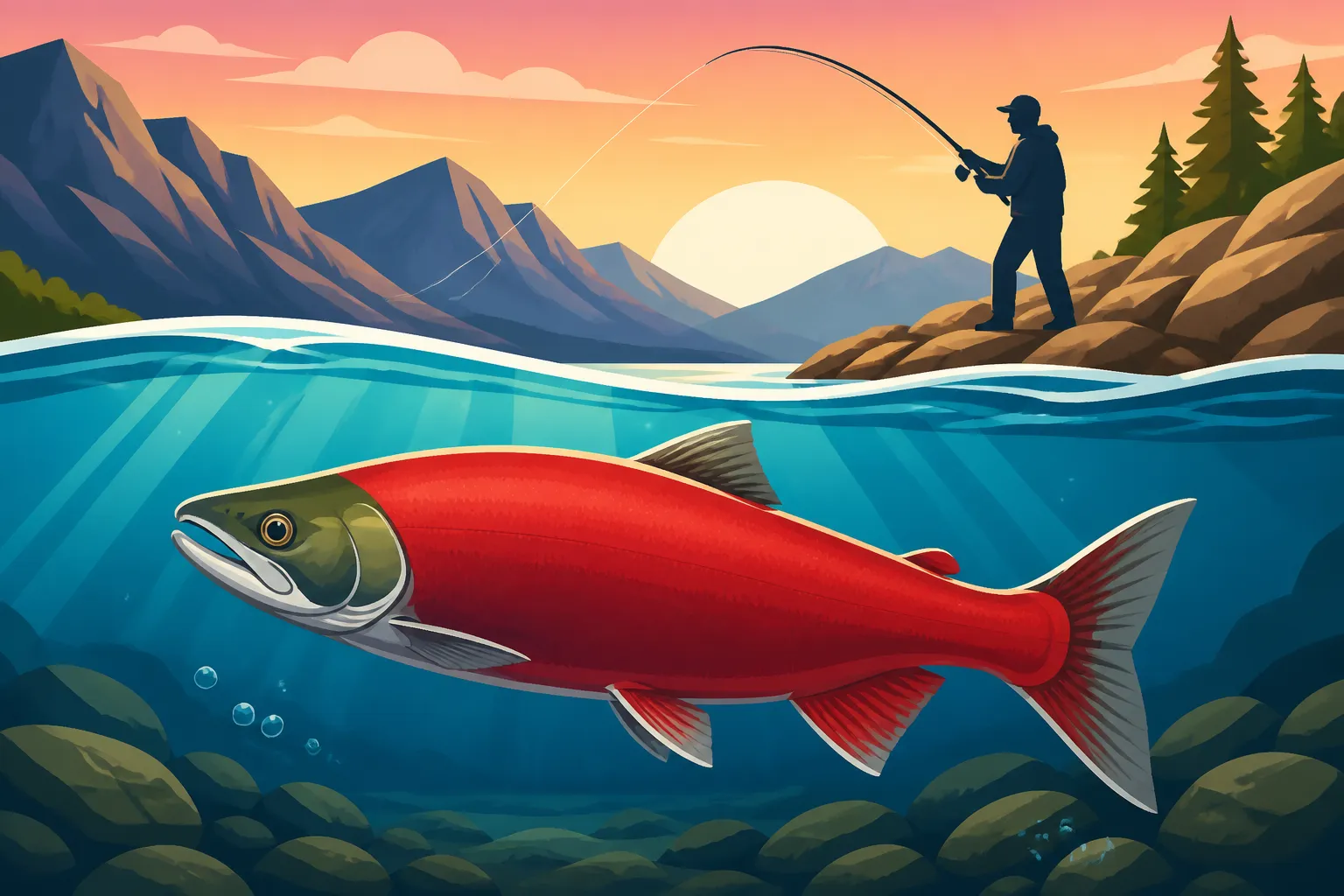
There's no denying the appeal of kokanee salmon. These fish, a landlocked form of sockeye salmon, offer a unique angling experience that draws enthusiasts from all walks of life. Their distinct characteristics and the specialized techniques required to catch them make them a prized target, but their presence in Nevada is truly quite rare.
What Makes Kokanee So Desirable Elsewhere?
In states like California, Oregon, Washington, and Colorado, kokanee salmon are a huge draw for a number of reasons. For one, they are absolutely beautiful fish, often sporting a shimmering silver body that turns a brilliant red during their spawning run, especially the males. But beyond their looks, they are known for being tenacious fighters on light tackle, offering an exciting challenge for anglers. They don't grow to massive sizes like some other salmonids, typically ranging from 10 to 18 inches, but what they lack in sheer bulk, they make up for in spirited resistance.
Perhaps one of the biggest appeals is their culinary quality. Kokanee are renowned for their rich, orange-red flesh and delicious taste, making them a fantastic table fare. Many anglers specifically target them for their meat, which is often considered a delicacy. Their schooling behavior also means that once you locate a school, you can often enjoy fast-paced action, creating memorable days on the water. The combination of their fighting spirit, beauty, and taste makes them a truly desirable game fish in areas where they thrive, prompting many to inquire about a similar experience in Nevada.
Why the Discrepancy in Nevada?
The reason for the limited presence of kokanee salmon in Nevada largely comes down to environmental suitability and state fishery management priorities. Nevada, with its predominantly arid climate, features many reservoirs that, while large, often lack the specific, consistent environmental conditions that kokanee salmon absolutely require to flourish and sustain a strong, natural population. These conditions include consistent cold water temperatures throughout the year, especially in deeper sections, and abundant zooplankton as a primary food source.
Many of Nevada's reservoirs, particularly in the southern region, can experience significant thermal stratification in summer, leading to warm surface waters and deeper waters that might lack sufficient oxygen for a sensitive species like kokanee. The state's natural hydrology also provides fewer of the cold, flowing tributary streams that are ideal for kokanee spawning runs. Consequently, the Nevada Department of Wildlife (NDOW) has historically focused its stocking and management efforts on other species that are much better adapted to Nevada's unique and often challenging aquatic environments. These are often fish that can withstand wider temperature fluctuations and are more resilient to the typical conditions found in our desert reservoirs, ensuring a more consistent and successful fishery for the public.
Pinpointing Kokanee in Nevada's Waters: A Rare Occurrence
When it comes to kokanee salmon in Nevada, you're not going to find them widely distributed across the state's many lakes and reservoirs. Their presence is, to put it mildly, quite limited and often experimental. This scarcity is a key reason why many anglers are left wondering if they even exist here.
Documented (But Limited) Stocking and Sightings
For those determined to seek out kokanee in Nevada, information is sparse, and the reality is that any "presence" is typically the result of very specific, often historical or experimental, stocking efforts. Unlike Nevada Trout Stocking Schedule which regularly replenishes popular trout fisheries across the state, kokanee stockings have been few and far between. There have been instances where NDOW has explored the possibility of establishing kokanee populations in certain high-elevation or deep, cold-water reservoirs, but these have rarely led to self-sustaining or easily accessible recreational fisheries.
For example, small, isolated populations might occasionally be found in a few select waters that mimic their preferred habitat, often deep, cold reservoirs in northern Nevada. However, these are generally not advertised as primary kokanee destinations, and obtaining up-to-date information on their status can be challenging. Anglers might stumble upon one by chance while targeting other species, but setting out with the sole intention of catching kokanee in most Nevada waters is likely to lead to disappointment. The fish just aren't there in the numbers or consistency needed to support a dedicated fishery, which is a stark contrast to the abundant trout and bass populations we celebrate.
The State's Focus: Prioritizing Other Fish Species
The Nevada Department of Wildlife (NDOW) operates with finite resources, and their stocking programs are carefully planned to maximize angler success and ecological viability. Given the challenging environmental conditions of many Nevada waters, it makes practical sense to prioritize species that are known to thrive here. This is why you'll find extensive stocking programs for rainbow trout, brown trout, and various bass species. For instance, many urban ponds are regularly stocked with catchable Rainbow Trout Fishing in Nevada, and major reservoirs like Lake Mead and Lake Mohave are renowned for their Largemouth Bass Fishing in Nevada and incredible Striped Bass Fishing in Nevada.
In recent decades, NDOW has also seen great success with hybrid striped bass, often called wipers. These powerful, fast-growing fish are a cross between striped bass and white bass and are much more resilient to the fluctuating water temperatures and habitat conditions found in Nevada's larger reservoirs. The introduction and management of wipers have created a fantastic sport fishery, offering hard-fighting fish that grow to impressive sizes. In many ways, the success of species like wipers means that while kokanee might be a desirable fish, NDOW has strategically focused its efforts on creating and maintaining robust fisheries for species that can truly flourish and provide consistent opportunities for the state's anglers. You can learn more about these fascinating fish in our guide on Wiper Hybrid Bass Identification.
Understanding Kokanee Salmon Biology and Habitat Needs
To truly understand why kokanee salmon are such a rare find in Nevada, it's crucial to look at their specific biological requirements. These aren't just any fish; they have very particular demands from their environment, and Nevada's landscape often struggles to meet them consistently.
Preferred Environment and Water Conditions
Kokanee salmon are creatures of cold, clean water. They thrive in deep, oligotrophic (nutrient-poor) lakes and reservoirs with stable thermal stratification. This means the water naturally separates into distinct layers: a warmer surface layer and a much colder, deeper layer. Kokanee typically spend most of their lives in this cooler, oxygen-rich hypolimnion (the deep, cold layer) where temperatures usually stay below 60°F (15°C), often preferring the mid-50s. If the water gets too warm, especially for extended periods, it stresses the fish, impacts their feeding, and can even be lethal.
Many of Nevada's larger reservoirs, particularly those in the southern, hotter regions, experience prolonged periods where the deeper waters become anoxic (devoid of oxygen) during summer stratification, or simply get too warm throughout the water column. While surface temperatures might reach into the 80s or even 90s, the thermocline (the layer where temperature changes rapidly) might not provide enough cool, oxygenated water for kokanee to survive. This is a critical factor for their survival. Lakes like Lake Tahoe, partly in Nevada, do offer suitable deep, cold water for salmonids, but even there, kokanee populations are more robust on the California side, often due to more favorable tributary spawning grounds or management differences.
Spawning Habits and Life Cycle
The life cycle of a kokanee salmon is relatively short, typically 3 to 4 years, and culminates in a spectacular spawning run. Unlike their anadromous sockeye relatives that migrate to the ocean, landlocked kokanee return to the streams where they were born, or were stocked, to reproduce. They prefer shallow, gravelly stream beds with cold, clean, flowing water for laying their eggs. After spawning, both the male and female kokanee die, completing their life cycle.
This specific spawning requirement presents a major hurdle for establishing widespread kokanee populations in Nevada. Many of our reservoirs either lack suitable inflowing streams with the right gravel size and consistent cold water temperatures, or these streams are ephemeral, drying up during periods of drought. Even if adult kokanee could survive in a reservoir, the lack of viable spawning habitat means that a self-sustaining population is nearly impossible without continuous human intervention through stocking. This is a significant logistical and financial commitment, especially when other, more resilient species can thrive with less intensive management. For many of the fish you'll find here, understanding Nevada Fishing Seasons by Month is more about behavior than strict spawning closures.
The Reality of Targeting Kokanee (If You Were to Try)
Let's say you've found one of those rare Nevada waters rumored to hold a few kokanee, or you're heading to a nearby state where they're plentiful. Successfully catching these fish isn't like casting for a rainbow trout with a worm under a bobber. It demands specialized techniques and gear, turning it into a dedicated pursuit.
Specialized Kokanee Trolling Methods
Kokanee are typically found suspended in the water column, often at specific depths where the water temperature and oxygen levels are just right, and their preferred zooplankton food source is abundant. This makes them primarily a trolling target. To effectively reach these depths, anglers almost universally rely on downriggers. These devices allow you to send your lure down to a precise depth, sometimes as deep as 50 to 100 feet or more, and keep it there as your boat moves. Without a downrigger, reaching the fish consistently is incredibly difficult.
The tackle itself is also specialized. Kokanee respond well to small, flashy lures, often tipped with corn or scent. Popular choices include small dodgers or flashers (which create attraction and vibration) followed by tiny hoochies, wedding rings, or mini spoons. The colors can be critical, with pink, orange, and chartreuse often being top producers. Trolling speed is another vital factor, typically very slow, usually between 1 to 1.5 miles per hour, but this can vary depending on the fish's mood and the water conditions. Mastering these nuances takes time, patience, and often a good fish finder to locate schools and determine their depth. If you're used to Trolling Techniques for Lake Tahoe Mackinaw, some principles might cross over, but kokanee require a lighter touch.
Essential Gear for Targeting Kokanee
Beyond the boat, downriggers, and specialized lures, a few other pieces of gear become indispensable for the dedicated kokanee angler. First, you'll want light action rods, often 6 to 7 feet long, paired with small spinning or baitcasting reels spooled with light line (4-8 lb test monofilament or fluorocarbon). The light tackle enhances the fight of these smaller fish and makes for a more sporting experience.
A reliable fish finder is absolutely crucial. Since kokanee suspend in open water, you need to see them to catch them. A good Best Fish Finder for Reservoir Fishing will help you identify schools of fish, track their depth, and even spot the tell-tale "arcs" that indicate fish present. Many anglers also use a dedicated "kokanee scent" or "bait dye" for their corn, believing it significantly increases strikes. You can find a vast array of these specialized kokanee lures, scents, and even compact downriggers and rods on platforms like Amazon, making it easy to outfit yourself for this specific type of fishing. Proper sun protection, including hats, sunglasses, and sunscreen, is also key for long days on the water, especially in the bright Nevada sun. For those interested in boating for fishing, check out our guide on Best Boats for Nevada Reservoir Fishing.
Challenges and Conservation Efforts for Kokanee in Nevada
The story of kokanee salmon in Nevada is largely one of environmental limitations and strategic management decisions. While the idea of a thriving kokanee fishery here is appealing, the challenges are significant, prompting the state to focus its conservation and stocking efforts elsewhere.
Environmental Factors Limiting Kokanee Expansion
Nevada's unique climate and geology are the primary antagonists in the kokanee salmon narrative. As discussed, these fish demand specific environmental conditions that are simply not widespread in the Silver State. The pervasive issues include:
- Warm Water Temperatures: Many of Nevada's reservoirs, particularly those at lower elevations or in the southern part of the state, experience extended periods of warm water temperatures during the summer. Even at depth, many reservoirs struggle to maintain the consistently cool temperatures below 60°F that kokanee require for survival without severe stress.
- Low Oxygen Levels (Anoxia): In stratified reservoirs, the deeper, cooler water can become depleted of oxygen during the summer months. This anoxic condition creates a "dead zone" where fish cannot survive, shrinking the available habitat for kokanee even if the temperature is suitable.
- Lack of Suitable Spawning Habitat: Kokanee need clean, cold, flowing streams with gravel beds to spawn. Nevada's arid environment means many rivers and streams are ephemeral, too warm, or simply don't have the appropriate substrate. Even perennial streams often suffer from low flows or sedimentation, making them unsuitable for sensitive salmonid reproduction.
- Competition and Predation: Where kokanee might be introduced, they can face intense competition for food (zooplankton) from other planktivores, and heavy predation from larger game fish like Striped Bass Fishing in Nevada or Mackinaw Lake Trout at Lake Tahoe, further hindering their ability to establish self-sustaining populations.
These factors combine to create an environment where kokanee salmon would require constant, intensive, and likely uneconomical stocking efforts to maintain any semblance of a fishery, which leads to the state's strategic approach.
NDOW's Role in Salmon Management (Wipers vs. Kokanee)
The Nevada Department of Wildlife (NDOW) is responsible for managing the state's diverse aquatic resources and providing quality fishing opportunities. Given the environmental hurdles, NDOW has made deliberate choices about which species to prioritize in its stocking and management programs. For the vast majority of Nevada's reservoirs, resources are allocated to species that demonstrate a higher likelihood of survival and provide a greater return on investment for anglers.
This often means focusing on species like rainbow trout, which are widely stocked in urban ponds and mountain lakes, as well as various bass species that thrive in warmer waters. A notable success story is the stocking of wiper hybrid bass. These fish, as mentioned before, are a cross between striped bass and white bass. They are incredibly hardy, grow to impressive sizes, and offer a powerful fight. Wipers are well-suited to the conditions of large Nevada reservoirs, providing a thrilling and consistent trophy fishery. This strategic choice allows NDOW to develop and maintain robust fisheries that are well-adapted to the state's unique environment, offering a productive and enjoyable experience for more anglers, rather than chasing the elusive dream of a widespread kokanee salmon fishery that would demand disproportionate resources with uncertain outcomes. Information on fishing regulations, including general Nevada Fishing Regulations Explained, will cover these more common and successfully managed species.
Looking Ahead: Conservation, Management, and Alternative Fisheries
While the vision of a flourishing kokanee salmon fishery across Nevada might remain largely a dream, understanding why this is the case helps anglers appreciate the unique and thriving fisheries the state does offer.
Past Lessons and Future Possibilities (Very Limited)
Historically, there have been some limited attempts to introduce kokanee salmon into certain Nevada waters, often in conjunction with efforts in neighboring states or in areas with seemingly suitable conditions, such as deeper, colder mountain reservoirs. These experimental stockings have provided valuable data to NDOW regarding the species' adaptability (or lack thereof) to Nevada's specific conditions. The lessons learned consistently point to the same conclusions: without very particular and often artificial interventions (like continuous stocking and specialized habitat modifications), kokanee struggle to establish self-sustaining populations that can support a recreational fishery.
Looking to the future, it's highly improbable that kokanee salmon will become a widespread recreational target in Nevada. NDOW's focus is, and will likely remain, on enhancing and sustaining fisheries for species proven to thrive in the state's varied and often challenging aquatic environments. While conservation efforts might continue to monitor native and introduced salmonid species in specific, isolated instances, widespread kokanee expansion isn't currently a priority, nor is it biologically feasible for most of Nevada's waters.
Embracing Nevada's Robust Fisheries
Instead of longing for kokanee, anglers in Nevada have a fantastic array of fish species to target, each offering its own unique challenge and reward. The state boasts incredible fishing for:
- Trout: Rainbow Trout Fishing in Nevada, brown trout, and native Lahontan Cutthroat Trout in Nevada thrive in numerous lakes, rivers, and high-elevation streams. Whether you enjoy fly fishing in a mountain stream or bait fishing at an urban pond, trout are plentiful.
- Bass: Both Largemouth Bass Fishing in Nevada and Smallmouth Bass Fishing in Nevada offer exciting action in many reservoirs, particularly Lake Mead and Lake Mohave, where they can grow to impressive sizes.
- Striped Bass and Wipers: For sheer power and hard fighting, the striped bass of Lake Mead and Lake Mohave, along with the hybrid wipers in various reservoirs, provide unparalleled excitement. These are truly trophy-caliber fish.
- Catfish: Channel Catfish Fishing in Nevada are abundant in many warmer reservoirs and ponds, offering excellent fishing opportunities, especially for those who enjoy night fishing.
- Panfish: Bluegill, crappie, and Yellow Perch Fishing in Nevada are popular targets, particularly for family fishing trips, offering consistent action and great table fare.
These species are well-managed, regularly stocked where needed, and provide consistent opportunities for anglers throughout the year. For a comprehensive look at what's biting, consult the Nevada Fish Species Guide. Rather than focusing on what's absent, embracing these incredibly rich and diverse fisheries ensures a rewarding and exciting experience for every angler who wets a line in the Silver State. You can find essential gear for all these fishing adventures on platforms like Amazon, from basic tackle setups to advanced electronics.
Here's a quick comparison of general characteristics between Kokanee and some prevalent Nevada game fish:
| Feature | Kokanee Salmon (Limited in NV) | Rainbow Trout (Abundant in NV) | Wiper Hybrid Bass (Abundant in NV) | Largemouth Bass (Abundant in NV) |
|---|---|---|---|---|
| Preferred Habitat | Deep, cold, oxygen-rich lakes; specific spawning streams | Coldwater lakes, rivers, urban ponds | Large reservoirs, open water | Warmer, shallow, structured lakes & ponds |
| Primary Diet | Zooplankton, small insects | Insects, crustaceans, smaller fish | Shad, other baitfish | Crayfish, baitfish, frogs, insects |
| Typical Size | 10-18 inches | 8-20 inches | 15-30+ inches | 10-22+ inches |
| Fishing Method | Deep water trolling | Bait, lures, flies (various methods) | Trolling, casting, jigging | Casting lures, plastics, live bait |
| Reproduction | Spawn in streams, then die | Some natural, heavy stocking | Sterile (do not reproduce), stocked | Natural reproduction, some stocking |
| Nevada Presence | Very limited, experimental | Widespread, successful fisheries | Widespread, highly successful | Widespread, highly successful |
Disclaimer
This article is for general informational purposes only and does not constitute professional advice. Laws, prices and regulations vary by location and change over time. Consult a qualified professional for guidance on your specific situation.